
الأربعاء، 14 ديسمبر 2016


الخميس، 24 نوفمبر 2016
السلام عليكم ورحمة الله وبركاته... وبعد:
بناءً
على التعميم الوارد رقم 38250966 وتاريخ 26/2/1438هـ بشأن توزيع درجات اختبار
نهاية الفصل الدراسي لمادة اللغة الإنجليزية للمرحلتين المتوسطة والثانوية (النظام الفصلي
ونظام المقررات) المبني على تعميم معالي الوزير 38138305 وتاريخ 18/1/1438هـ بشأن توزيع
درجات اختبار نهاية الفصل الدراسي لمادة اللغة الإنجليزية عليه الرجاء الالتزام بالتوزيع المرفق والبدء في
تطبيقه من الفصل الدراسي الأول للعام الدراسي الحالي 1437/1438هـ حيث ألغى هذا
التعميم ما سبقه من تعاميم بشأن اختبارات مادة اللغة الإنجليزية
الرجاء
البدء بمتابعة جميع مدارسك المسندة إليك والتأكيد عليها بتطبيق التعميم الجديد مع
مراعاة :
1.
عدم وجود تغيير في
توزيع درجات أعمال المستوى
2.
تقسيم سؤال التعبير
للمرحلة الثانوية (نظام فصلي ونظام مقررات ) إلى سؤالين منفصلين بدرجات مستقلة لكل
سؤال (Free + Guided) وبذلك تشمل ورقة افختبار
التحريري النهائي للمرحلة الثانوية على 5 أسئلة :
· سؤال
تعبير
· قطعة
الفهم
· قواعد
اللغة
· المفردات
وورقة
الإختبار التحريري النهائي للمرحلة المتوسطة على 5 أسئلة
· موضوع
تعبير واحد
· قطعة
الفهم
· قواعد
اللغة
· المفردات
· إملاء
3.
إضافة Listening
Comprehension كجزء
من درجة الاختبار النهائي للمادة تضاف له خانة في المراية بالإضافة إلى خانة ال Continuous
Oral Evaluation وتجمع مع درجة اختبار نهاية الفصل
4.
الرجوع إلى الفقرات
1-8 الموجودة في تعميم الاختبارات الأخير والالتزام بما ورد فيها.
ملحوظة:
يخصص
لاختبار Listening
Comprehension أيام تدرج في جدول الاختبارات الشفهية الرسمي
للمدارس في أخر أسبوع /أسبوعين من الفصل الدراسي .

الثلاثاء، 8 نوفمبر 2016

المكرمة معلمة مادة اللغة الانجليزية
انطلقت فعاليات مسابقة(قصتي) الخاصة بقسم اللغة الانجليزية لطالبات المراحل الثلاثة في المدارس الحكومية والأهلية
الرجاء حث الطالبات على المشاركة وتشجيعهن علما بأن آخر موعد لتسليم القصص المرشحة بعد تصفيتها للشعبة في موعد أقصاه يوم الاثنين 15 / 5/ 1438 هـ
كما نرجوا منك الرجوع الى التعميم الخاص بالمسابقة المرسل على البريد الالكتروني للمدارس وقراءة مراحل وآلية إجراء المسابقة واتباع التعليمات الواردة فيها
شاكرين ومقدرين حماسك وتعاونك
Literacy, or the ability to read and write, is one of the greatest gifts
you can give a person. Though the skills are many and take time and
practice to master, they will open up countless opportunities across a
lifetime. These opportunities can then improve the lives of the next
generation, greatly impacting and improving communities. Reading and
writing also brings joy to many people. If you would like to encourage
literacy skills in the lives of people around you, here are some helpful
ideas.

Build on earlier skills. Just because your students should have learned basic grammar or spelling when they were younger does not mean that those skills should be neglected now. Continue to build on and maintain skills like grammar, spelling, parts of speech, voice, tense and writing style. This will keep their skills sharp, as well as helping any students who may have fallen through the cracks.

Encourage creativity. By this older stage, many people will have a reduced capacity for creativity. Creative thinking skills, however, lead people to be better problem solvers and innovators, so such skills should be fostered in any way possible. Writing is one of the best opportunities for students to bring creativity into their academics. Encourage them to take new approaches to assignments and methods of reading.

Emphasize critical thinking. During this time in their lives, children should be developing the skills necessary to prepare them for higher learning. This will ensure that they have the most opportunities possible. An absolutely necessary skill for higher education, as well as a vital life skill, is critical thinking. Encourage your students to really think about the things they are reading and writing. This will prepare them to do everything from analyze news stories to participating fully in the political process.
- Have your students ask questions about what they are reading. Who wrote this book? Why did they write it? Who did they write it for? What impact did the environment around them have on the text? There are many questions like these which can serve to illuminate information hidden within the things they read.
- Have your students ask questions about their own writing. Why did I choose this voice? Why do I have the opinion I've expressed? Why is this something I care about? What would I rather be writing? These kinds of questions can lead your students to learn a lot about themselves but it will also help them make more conscious decisions about the things they write.

Prepare for real, academic writing. If you want your students to have a real opportunity at getting a higher education, they will need to be able to do the more complex types of writing which are common in colleges, universities, and training programs. This means employing argumentative skills, expressing themselves clearly, using logic, and following proper formats. Give them opportunities to practice these skills while pursuing topics that interest them.

Encourage reading. We often become better writers by reading excellent examples of the craft. Get your teens reading well written, classic literature. Give them books in widely varying styles so that they can see differences in voice, description and word choice. They should be given older works which remain classic, in order to see why certain techniques are timeless and hold wide appeal. They should also read newer material, so that they have solid models to build on for their own writing.
- This will have the added benefit of often expanding a student’s vocabulary. Encourage them to look up any word they don’t know. This will help give them the adult vocabulary which is often a mark of a good education, which will help them exponentially in further academic and professional environments.

Teach careful word choice. Many inexperienced writers will often use far more or far fewer words than they need to. Guide them until they learn to balance description, dialogue, detail and information. This is a very difficult skill to learn and will take time as well as a great deal of practice.
- Get overly wordy writers to learn what should be included and what is just overkill. This will often be a wealth of adjectives or repetitive sentences. Show them how to weed out extras and get their sentences down to the basics.
- A smaller portion of writers will have a hard time getting descriptive and specific enough. Teach them to remove themselves and approach their writing with a list of requirements. Could this be understood by someone entirely new to the subject? Could someone come to a specific page and be able to follow along? Give them exercises, such as having to write an entire page describing an apple, to improve their skills.

Develop handwriting skills. An important skill for teens to develop is adult-level handwriting. While rounded, uneven characters with childish shapes are acceptable for beginning students, teens will want to develop a more “adult” appearance to their handwriting if they want to be taken seriously in future academic and professional endeavors.
- Give teens lots of opportunity to practice their handwriting. Most assignments are typed these days and this removes a student’s chance to improve their handwriting. Require shorter assignments to be handwritten or find other ways for them to spend time improving their skills.
- Encourage legibility, even lettering, and clean lines. The writing doesn’t need to be in cursive in order to look adult and professional, it simply needs to be precise. When teens excel at this, reward them. If they struggle, show them what needs to be improved and give them opportunity to fix mistakes.
- Give handwriting exercises as minor extra credit. Repeated lines of the same letter will give students great practice and allow them to easily see improvements and become acquainted with appropriate gestures.
الاثنين، 7 نوفمبر 2016
اقيم اليوم درس تطبيقي للمعلمة/سحر الهلالي
من المتوسطة الاولى بحضور رئيسة شعبة اللغة الانجليزية
وقد حضر الدرس عدد من معلمات اللغة الانجليزية
نشكر المعلمة على الدرس الرائع وبارك الله جهودها
كمانشكرها على حسن الاستضافة وكرم الضيافة


Literacy, or the ability to read and write, is one of the greatest gifts
you can give a person. Though the skills are many and take time and
practice to master, they will open up countless opportunities across a
lifetime. These opportunities can then improve the lives of the next
generation, greatly impacting and improving communities. Reading and
writing also brings joy to many people. If you would like to encourage
literacy skills in the lives of people around you, here are some helpful
ideas.

Focus on the simplest skills. When teaching literacy to children and pre-teens, it is important to focus on building the simplest skills first. Emphasize the fundamental building blocks discussed above, as having a thorough understanding of these concepts and skills will give your students a solid foundation on which to build future reading and writing skills.
- For elementary age children, literacy skills will place a stronger emphasis on things like spelling, whereas literacy education for pre-teens will spend more time with grammar.

Introduce the types of writing. There are many different types of writing which your students will need to learn about. Knowing how to recognize and reproduce different styles for different contexts will be very important later on in life.
- Teach your students to recognize narrative writing. This is writing which conveys a story and is the form most often read for pleasure. It is commonly used as an exercise to increase literacy skills. Examples of narrative writing include novels, biographies, history, and newspaper articles. It is easily recognized by the format: “This happened, and then this happened, and then this happened.” and so on.
- Teach your students to recognize persuasive writing. This is writing which lays out a logical argument. Examples of persuasive writing can be seen in job applications, editorials, and academic papers.
- Teach your students to recognize expository writing. This is writing which explains, informs or describes something. What you are reading now is an excellent example of expository writing. Newspaper articles can also fall into this category, along with encyclopedias and reports.

Teach the elements of storytelling. Children in this age-group will need to learn the basic elements of storytelling. This will give them the tools they need later in life in order to analyze the things they read.
- Elements of storytelling include beginning, middle and end, crisis or climax, and character. These are most easily taught to children when done in tandem with reading a book aloud over the course of a few weeks. This gives you the opportunity to discuss and analyze the text, so that they can see how these ideas work in practice. Solidify these skills by having them write stories of their own.

Introduce the Five Paragraph Essay. The Five Paragraph Essay includes an introduction, three body paragraphs (usually argumentative in some way), and a conclusion. This common form of writing will be used throughout their lives and should be introduced as early as possible.
- Introductory assignments could include a review of their favorite toy or game, a persuasive essay about why they should be allowed to eat more candy, or a biography of their favorite family member.

Teach the use of voice. Voice refers to who is “speaking” in a text. Voice can be but should generally not be mixed within a text. Being able to identify and manipulate voice will be important for your students to learn, as this will help them analyze the things they read.
- Common voices include first person (heavy use of “I/me”), second person (heavy use of “you”), and third person (heavy use of names and “they”). Tense can also be applied to each of these voices, modifying how it sounds and reads.
- First person example (past tense): “I went for a walk today. My dog, Spike, came with me. Spike likes to go on walks with me.”
- Second person example: “You went for a walk today. Your dog, Spike, came with you. Spike likes to go on walks with you.”
- Third person example: “Sarah went for a walk today. Her dog, Spike, went with her. Spike likes to go on walks with her.”

Avoid setting limits. Especially with elementary age children, try to leave as many doors open as possible within their exercises and assignments. Children at this age are very creative (a trait which will be very helpful later in life) and it is better for them if this creativity is not discouraged or downplayed.
- Children will also learn better by being forced to think for themselves, so giving them opportunities to do that (by leaving assignments and exercises open-ended) will help them significantly.

Keep it as fun as possible. Make learning fun. Children will be distracted easily if they find their work too boring or non-engaging. In fusing learning and play, you will ensure that your students are engaged and absorbing information.
- For example, with middle-school age children you can have them create a game and then write rules for the game. This will be fun but it will also force them to think about writing specific language which is also easy to follow.
- For elementary children, let them write, edit and illustrate their own books. This will work on developing their understanding of story and character, while simultaneously improving their ability to form correct sentences with proper spelling.
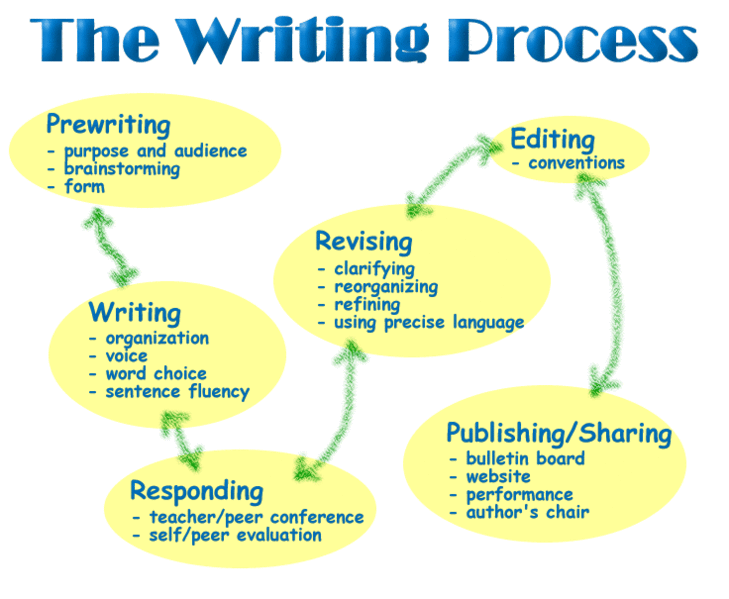
Teach pre- and post-writing process skills. It will be important for children to learn that there is more to writing that just putting words on a page. Teaching pre- and post-writing skills will teach children to analyze writing, as well as working to build their language skills.
- Outlines are an example of a pre-writing skill. Outlining what they intend to write will help learners work through logical processes. It will also teach them to think of elements of writing (different paragraphs or subtopics) as a unified whole, rather than pieces simply placed next to each other.
- Editing is an example of a post-writing skill. Editing their own work, as well as the work of others, will build language skills. This will make your students more competent writers, as well as increasing their confidence in their writing. If they know how to look for mistakes and correct them, they will be less restrained by fear of failure.
الأحد، 6 نوفمبر 2016


